ApexIQ. Translating Formula 1 data, strategy, and race analysis into a data-driven digital experience, designed and built without code.
Client:
(Self-initiated project)
Areas:
Web Design
Branding
Framer Development
Project info:
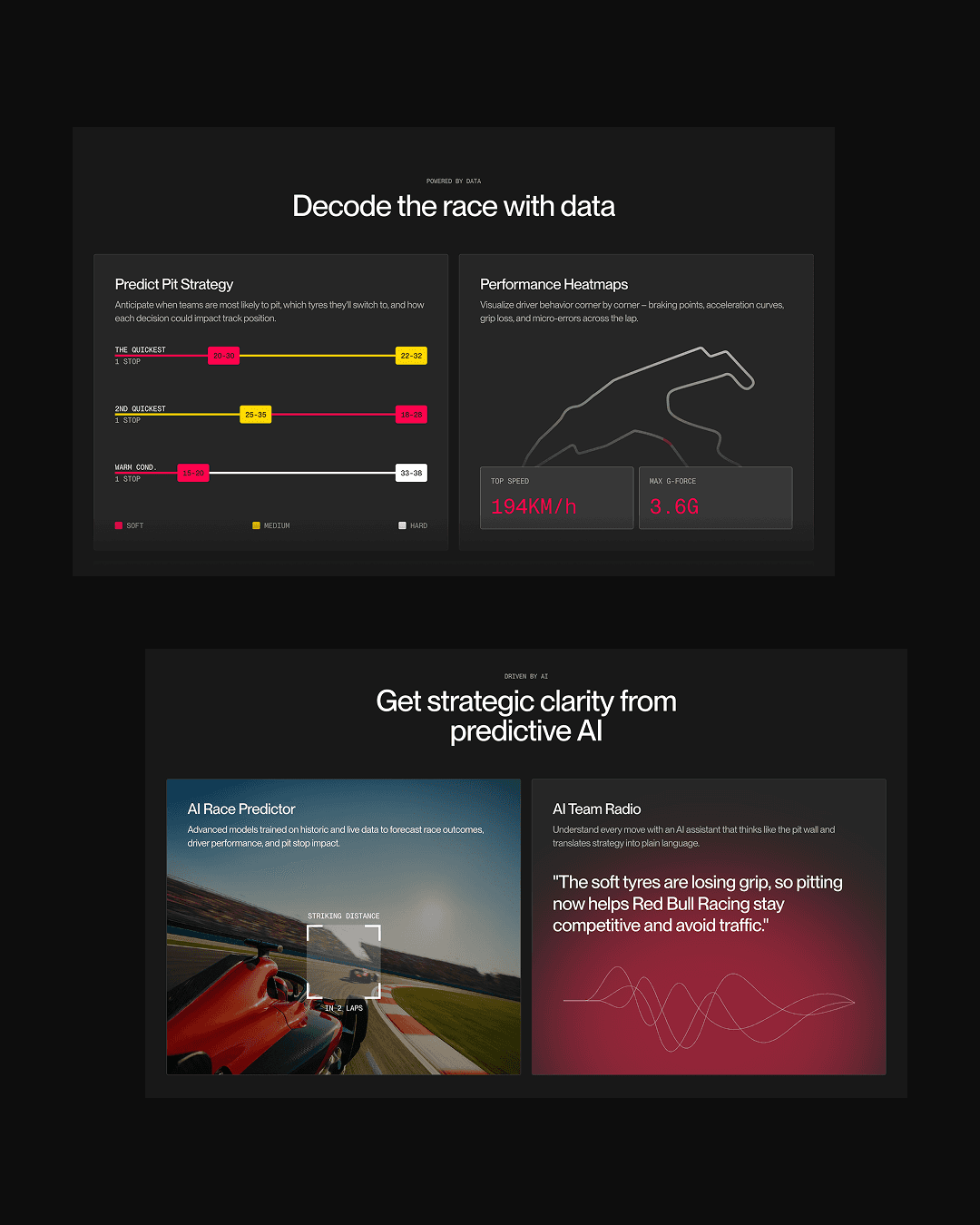
ApexIQ is a self-initiated product experiment driven by curiosity and a desire to design something that feels real. The project explores what it means to design a credible SaaS product around Formula 1 — translating strategy, data, and race intelligence into a clear, structured digital experience rather than a visual concept.
Approached as a fully fledged product from the start, ApexIQ was designed end-to-end — from concept and brand to UX, UI, content structure, and no-code development in Framer. Particular focus was placed on product-level details such as internal views, content hierarchy, and functional elements like a wishlist sign-up, reinforcing the feeling of a real, working tool.
Credibility was the guiding principle throughout. The interface and tone sit between education and professional analytical software, capturing the atmosphere of Formula 1 while remaining accessible to both newcomers and deeply engaged fans. The goal was to communicate intelligence and decision-making in a way that feels authentic to the sport.
ApexIQ received a distinction during the first edition of the Framer course organized by KLIKA.DIGITAL. More importantly, it became a hands-on exploration of product thinking, system design, and no-code execution — shaping how I approach digital products beyond purely visual design.
Credits:
More Info
More Info
Project info:
ApexIQ is a self-initiated product experiment driven by curiosity and a desire to design something that feels real. The project explores what it means to design a credible SaaS product around Formula 1 — translating strategy, data, and race intelligence into a clear, structured digital experience rather than a visual concept.
Approached as a fully fledged product from the start, ApexIQ was designed end-to-end — from concept and brand to UX, UI, content structure, and no-code development in Framer. Particular focus was placed on product-level details such as internal views, content hierarchy, and functional elements like a wishlist sign-up, reinforcing the feeling of a real, working tool.
Credibility was the guiding principle throughout. The interface and tone sit between education and professional analytical software, capturing the atmosphere of Formula 1 while remaining accessible to both newcomers and deeply engaged fans. The goal was to communicate intelligence and decision-making in a way that feels authentic to the sport.
ApexIQ received a distinction during the first edition of the Framer course organized by KLIKA.DIGITAL. More importantly, it became a hands-on exploration of product thinking, system design, and no-code execution — shaping how I approach digital products beyond purely visual design.
Credits:
More Info
More Info


Next: